• Home
  • Blog
  • The Sparrow Fund
    • Together Called
    • We Are Grafted In blog
    • Speaking
  • Jiayin
  • Contact

My Overthinking

Philly Area mom, Life forever changed by adoption

  • Home
  • Blog
  • The Sparrow Fund
    • Together Called
    • We Are Grafted In blog
    • Speaking
  • Jiayin
  • Contact

The third part of the triad {guest post}

11.14.12

triad (trī’ād’) n. A collection of three things having something in common.

adoption triad (əˈdɒpt shuhn trī’ād’) n. The interrelated, interdependent relationship of the people intimately involved in an adoption, namely the birth parents, the adoptive parents, and the adopted person.

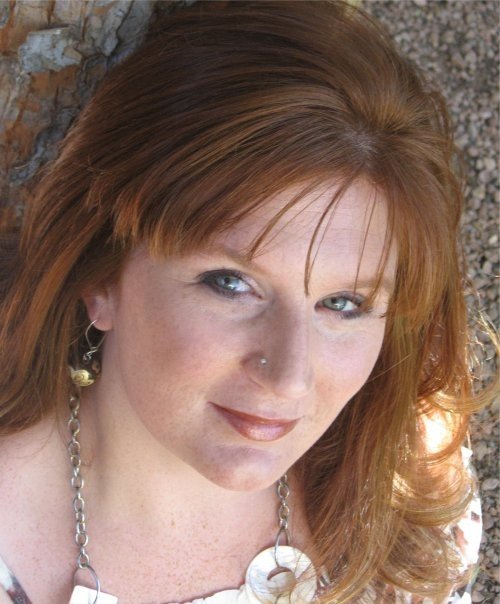
I want to introduce you all to Cynthia, a passionate, wise wife and mother who also is a part of that adoption triad as a birthmother.
__________________________________

Can you share a bit about the experience of placing your child for adoption? 

My birthson, Joshua, was born in 2005. He was my third child. I felt ill equipped to give him the best life possible. I knew God had a plan for my son; I just didn’t believe that plan meant parenting. I was in a toxic relationship with his birthfather that I was ready to get out of for good. I was just finally ready to let God lead in my life rather than the other way around.

What level of openness have you had in the past and do you currently have with the adoptive family? 

We enjoy a completely open adoption and have had this arrangement all along. We send pictures, talk on the phone, Skype each other, stay at each other’s homes for minivacations, and our boys communicate as openly as they want.

How have you been able to serve birth mothers?

I started writing Restorative Grief: A Guide To Healing From Adoption for a local agency to use as a post relinquishment tool. Very quickly, it grew into something more. I felt God tugging at my heart when I was seeing birthmom after birthmom still grieving years down the road. There will always be grief on this road, but there were so many women that hadn’t healed in the least, and I just realized that this was not God’s plan for their lives. They were spending so much time tied up in their emotions that they were never stepping out of the mire and into God’s glory. That was why I began writing. There are adoption agencies that use my book to do post-relinquishment counseling with their birthmothers. There are agencies that just hand them to every birthmother when she has placed. The response has been overwhelming and very much a blessing from God!

What message do you wish you could share with adoptive families?

I want adoptive families to understand adoption as God’s heart and not a baby buying business. Sometimes money and desires get in the way and things become convoluted. People want babies so badly illing to do anything, as want money so badly they also will do anything. Birthmothers are at the heart of adoption and we only have adoption as an option because of them. Watch how your agency treats its birthmothers. Ask birthmothers how they are treated after placement has occurred.

I also think all players in the adoption triad must be very honest with themselves about whether or not they are willing to have an open adoption. Many adoptive parents agree to open adoptions and then close them off after relinquishment paperwork is formalized. I have spoken with countless birthparents whose hearts are forever broken because they were fooled.

I believe adoption as a whole is God’s design. But I also believe some adoption reform is necessary because when it becomes about money or deceit, no one wins; least of all the child.

To all adoptive families, pray for your birth families. It is a hard road to walk, even for those who seem like they may have been hardened or unbothered. Pray for them.

How is adoption a part of your family now? How do you talk to the children you are raising about adoption? 

Adoption is an open-ended conversation in our home, and we are very honest in our approach. It has very much become a fact of life and all 3 of my children are close! My husband and I are also close with the adoptive parents. We truly have become family.
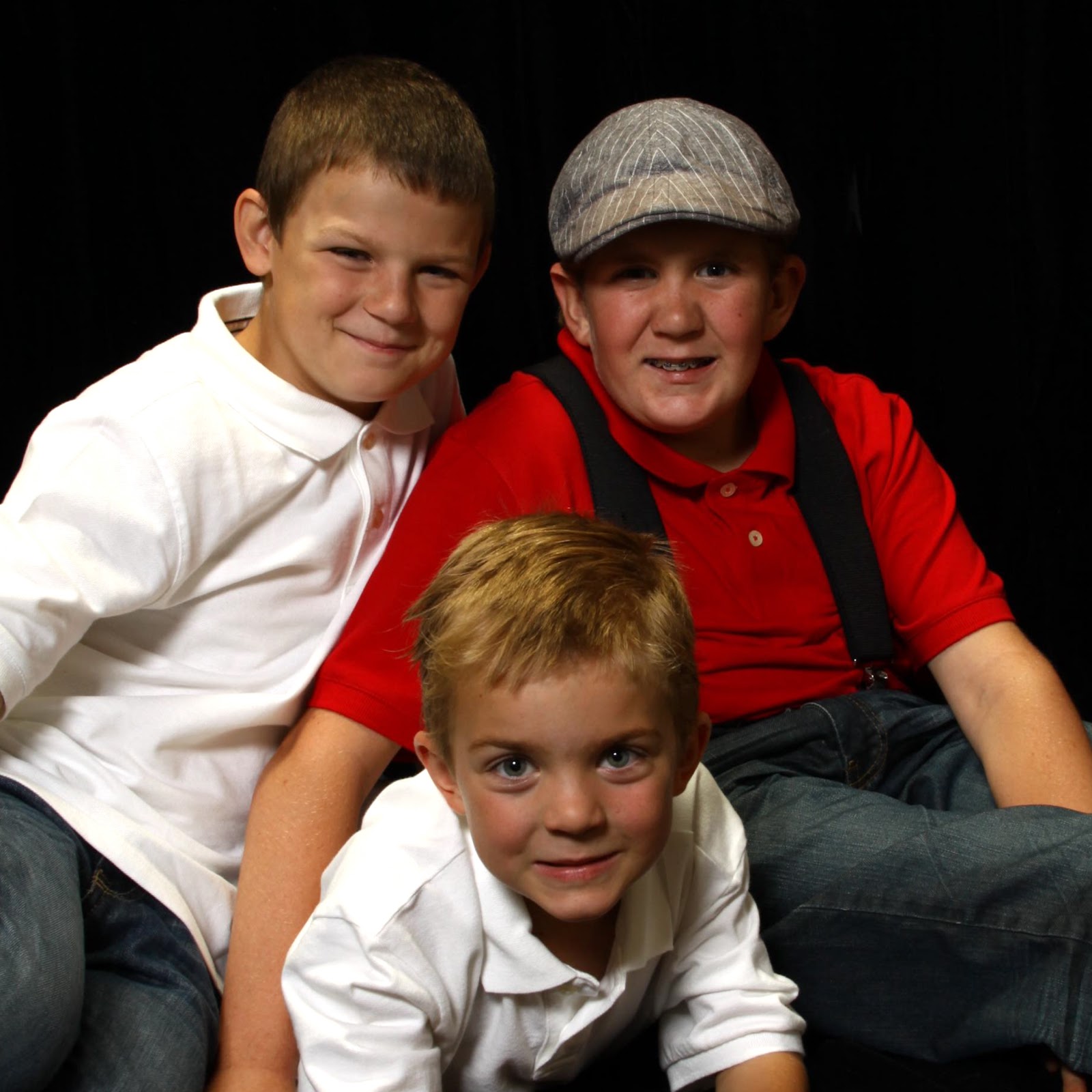

Kasey and Noah
and Joshua
Head on over to Production Not Reproduction to meet a bunch of other members of the triad.

No related posts.

Posted by Kelly the Overthinker
Filed Under: adoption, guest post

Talking About Wreck-it-Ralph

11.11.12

Family night out to the movies last night to see Wreck-it-Ralph is giving us some serious Sunday conversation material.

If you can get past a little potty humor (which apparently we have no problem doing), there’s some great stuff in there to dig into as a family.

Here are the questions I’m asking our kids today since I’m an overthinker an all–feel free to steal ’em and get your families thinking about things beyond a good laugh and creative animation:

* Why was Ralph frustrated with who he was and how he was treated?

* Ralph decided to try to get a medal so that things would change. If he had been able to get the medal and get back to his own game, do you think things would have been different? How?

* What did Ralph and Vanellope have in common? What did they both want more than anything else?

* When Ralph and Vanellope were almost ready for the race, King Candy visited Ralph and fed him a lie to get him to do what he wanted him to do. Ralph believed him and made a big decision based on it. Can you remember any time that you’ve believed something and made a choice based on it that wasn’t the best decision and then found out that what you believed wasn’t true?

* In the end, we find out that Vanellope isn’t really the “glitch” everyone–including herself–believed she was. How did her experience of being the “glitch” change who she really is? What did she learn by her experience of being the one who didn’t fit in?

* How did we see Ralph’s life change? What did he learn about himself?

* As we saw Ralph’s and Felix’s perspectives change, we also saw another change to their game–there were new characters in it. What were they able to do because of what they learned about themselves?

* At the very end, Ralph shared what his favorite part of the day was. It was a part of the day that he used to hate the most. Why did he like it now? How does a change in the way we see ourselves and others help us do and see the same things in a new way?

* In the Bible, there were some people that struggled with some of the same things that Ralph struggled with. A lot of folks saw these people as “bad guys” and, honestly, before they knew God, they were doing a lot of bad stuff. God sent one of his workers named Paul to give them a very important message: “If anyone is in Christ, he is a new creation. The old has passed away; behold, the new has come.” Because of what Christ did for us on the cross, those people didn’t have to be bad guys anymore. They were new creations and no longer stuck being what everyone thought they were. They were free. What do you struggle with? What would you like to put behind you? How do you want to live differently with God’s help?

* Watch the video below together. There are a lot of people who have broken hearts because of things they feel really bad about in their own lives. How can we be like the little girl in this movie and help people understand who they really are? What is one thing you can do right now to help someone see himself or herself the way God does?

No related posts.

Posted by Kelly the Overthinker
Filed Under: Reviews

Word {my new Bible]

11.9.12

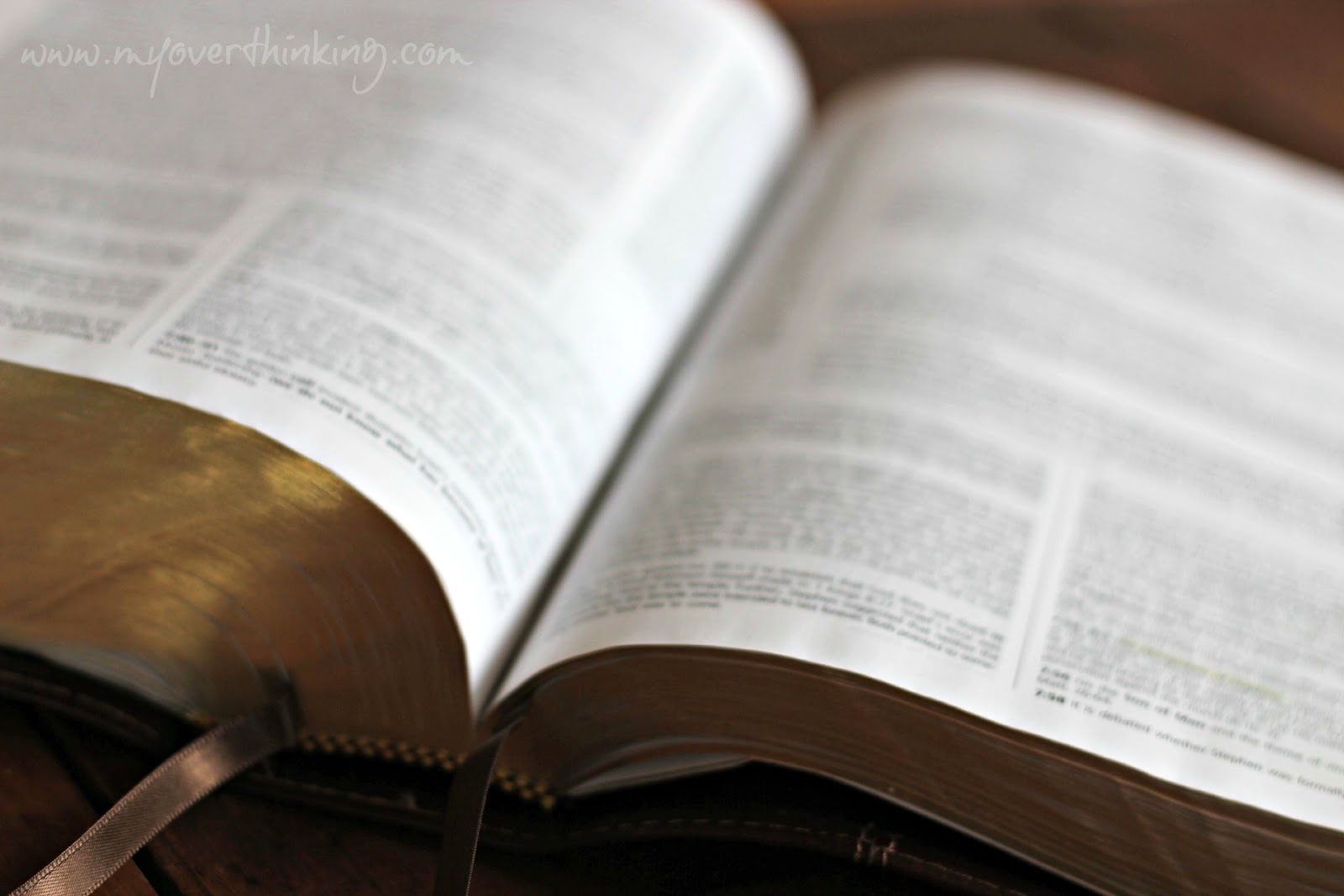
I have been clicking on “track order” too often than I care to admit. With anticipation like it was Christmas morning, my new Bible arrived. All 4 1/2 lbs. of new Bible. It’s pretty mammoth.

Mark’s all into his ESV app. Not me. There’s something to be said about holding the 4 1/2 lbs. of crisp linen paper bound in soft brown leather that just engages the senses and draws me in. I can’t help but hold it and breathe in that new Bible smell and start reading.

Now, let’s all hope I spend more time actually in this book than the time I spent deciding on it. You know I overthought this one like crazy.

No related posts.

Posted by Kelly the Overthinker
Filed Under: daily life

Real and Natural Mother {guest post}

11.8.12

Birth mother. Original mother. China mom. Adoptive mom. American mom. Natural mother. First mother. Second mother. Forever mom. Real mother. 

One little word can hold a lot of meaning. And, while I’d like to say I don’t get hung up on something as simple as one word, I often do.

While watching a dramatic scene in the movie Somewhere Between when a teen girl who had been adopted from China reunited with her birth family, I realized how emotionally charged a simple word like mother was to me. I shifted in my seat when the woman who had given birth to this young woman and abandoned her stroked her hair and told her to call her Mother as the woman who adopted her and raised her stood nearby.

As I consider my own response to mother nomenclature, I’d be remiss to not consider the more important potential response of my daughter from adoption as well as her siblings. My feelings, my response, my opinion is just one, and not the most significant one at that.

When I read Mila’s words about her experience with these “simple” words, I was able to let go a bit of my own perspective and hear a message I needed to hear. I asked her if I could share that with you. Mothers and waiting mothers of children who have another mother besides you, read on. 

_________________________________________
As one who reunited with my Korean parents in 2009, I most often refer to my Korean parents as, well, my Korean parents. I call my Korean father by either Korean father or Appa, and I call my Korean mother by either Korean mother or Omma. However, I do at times employ the terms biological and/or birthmother/father when the context of adoption is not already understood by the person or people with whom I’m conversing. I, then, eventually switch to saying Korean or American parents once the context is clear. With whom I am talking and the context of the interaction often affects what term I might choose to use. Some may call this wishy-washy; I call it survival and stress management.

I have to admit that biological sounds very cold and aloof to me. Because I am a deeply emotional person and feel a profound emotional connection to my Korean parents and family, I do not prefer the term biological. Furthermore, the term birthmother/father/family can carry other patronizing connotations with it with which some feel very uncomfortable. I honestly have never felt very patronized or emotionally negative toward this term, but I understand why others do. Particularly, I understand why the first/original mother/father would feel patronized by this term.

I rarely use the terms real or natural simply because, for me personally, psychologically and emotionally these terms feel too divisive and diminutive in either direction. I’ve actually heard real and natural used in the context of describing both adoptive and biological parents. In my own personal encounters with different people, I’ve heard people refer to my Korean parents as my real or natural parents as well as to my American parents as my real or natural parents.

If forced into a corner and demanded to make a distinction (which is a whole other pesky and irritating issue that surrounds being an adoptee), I would have to honestly say that, in my case, I consider both sets of parents–both my Korean and my American parents–to be my real and natural parents. I know that there are others who would take issue with this, and that’s understandable. The adoptee experience is so diverse and varied that we must consider and acknowledge the validity of each adoptee’s viewpoint and experience, particularly when those experiences and viewpoints differ. Failure to do so dismisses the inherent complexities and realities of the adoption experience. Of course, these relationships with my two sets of parents are complex and imperfect, laden with unresolved issues and dysfunction. But, nonetheless, I personally consider all four of them as my parents. Certainly and obviously, our relationships are characterized by different dynamics, histories, and roles. Yet, ultimately, I prefer to use none of the above identifiers, but rather simply to refer to them as my parents.

But, of course, it’s not that simple, and I often do feel compelled, or I am in some ways often required, or at least prodded and pried, to clarify and make distinctions to those addressing me. I make efforts to simply say in conversation my American parents and/or my Korean parents because that is what feels most natural and real to me. And, honestly, I wish that was simply enough. But, in adoption, rarely are things simple and rarely is one option enough.

_________________________________________

Mila is a wife, mother, daughter, sister, friend, as well as a Korean adoptee. She was born in Seoul, South Korea in 1975 and adopted by a White American family 6 months later. She has been in reunion with her Korean family since 2009. You can hear Mila’s voice at collective site Transracial Eyes where she serves as one of 20+ adult adoptee contributors.

No related posts.

Posted by Kelly the Overthinker
Filed Under: adoption, guest post

  • « Previous Page
  • 1
  • …
  • 165
  • 166
  • 167
  • 168
  • 169
  • …
  • 371
  • Next Page »

Hello

I overthink everything. This blog is a prime example. Make yourself a cup of coffee and sit down for a read. Actually, make that a pot of coffee. There’s a lot of overthinking here.

Connect

Recent Posts

She’s come a long way

Gift ideas for a happy-China-traveler-to-be

Three gifts.

A letter to my friend on her adoption eve

The day my husband quit his job {reflections 5 years later}

Subscribe to keep up to date via a newsletter

Archives

Popular Posts

  • The day we met Lydia in Xi'an
  • Getting the attachment thing
  • The day my husband quit his job
  • Other places you can find my writing

Follow Along!

Categories

Recent Posts

She’s come a long way

Gift ideas for a happy-China-traveler-to-be

Copyright © 2015 | Design by Dinosaur Stew